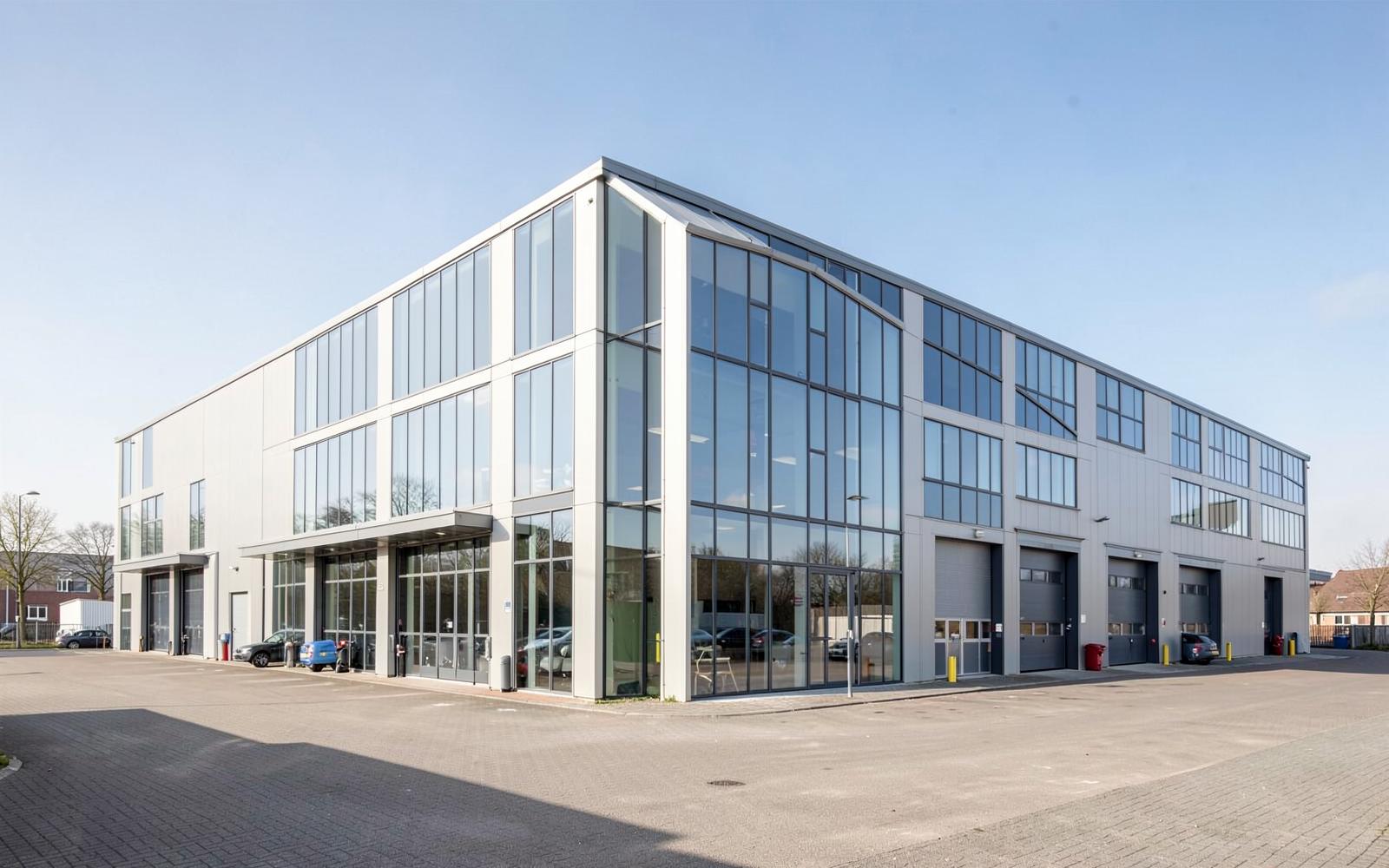
Renting or buying commercial property is not just a calculation, but also a strategic choice about flexibility, growth and building equity.
Business owners outgrowing their premises or just starting out sooner or later face the same question: whether to rent or buy commercial premises. On paper, buying often appears more attractive because you no longer pay rent to someone else, but reality is more nuanced. Both options have financial and strategic implications that extend well beyond monthly payments alone.
In this article, I outline the key factors, from cash flow to flexibility, and provide a calculation example to help you make an informed decision based on your own numbers.
Why renting can be attractive
Renting keeps your liquidity free for investments in your core business, such as staff, stock or machinery. You bear no risk of property depreciation and can relocate relatively easily as your business expands or scales back. For companies experiencing uncertainty regarding future size—such as a scale-up that does not yet know how many square metres it will need in three years—this offers a genuine advantage.
The downside is that you do not build equity in real estate and you remain dependent on the landlord for major alterations or long-term security. Rental prices in popular regions, including parts of Eindhoven, can also rise considerably upon lease renewal.
Why buying can be attractive
Buying gives you control over your location, the ability to adapt the premises to your liking, and the opportunity to build equity as you repay the loan and the property potentially appreciates in value. In the longer term, monthly loan repayments can turn out lower than rent, especially if interest rates are favourable at the time of purchase.
The drawback is that you require your own equity contribution, have less flexibility when expanding or downsizing, and as the owner you are responsible for maintenance and upcoming obligations such as mandatory energy label C compliance.
Decision framework: which factors carry the most weight
- Growth projections: do you expect to need significantly more or less space within five years
- Cash position: do you have sufficient own funds for a purchase without putting pressure on your working capital
- Location sensitivity: is your business heavily reliant on a specific location, for instance due to clients or staff
- Tax situation: how do depreciation and interest deductions compare with your current tax position
- Risk appetite: can you absorb a period of vacancy or falling property values as an owner
- Time horizon: is this a property where you intend to remain for fifteen years or longer
Calculation example: renting versus buying over ten years
Suppose you rent commercial premises of 400 m² for 60,000 euros per year, totalling 600,000 euros over ten years without taking rent increases into account. Buying costs, say, 700,000 euros, for which you provide 200,000 euros of your own equity and finance 500,000 euros on a linear repayment schedule over twenty years. Over ten years, you repay 250,000 euros and additionally pay interest on the average outstanding balance.
After ten years of ownership, you have a property with a remaining mortgage debt of 250,000 euros, having built equity through repayments and potential property appreciation. With renting, you have accumulated no property equity after ten years, but you will have had more liquidity during the term to invest in your business. Run these calculations with your own figures and current interest rates, and include maintenance costs and the likelihood of value appreciation or depreciation in your assessment.
Regional context: scarcity in Eindhoven
In and around Eindhoven, demand for commercial property—both offices and industrial units—is structurally high due to the growth of Brainport. This means rental rates are under upward pressure and sought-after premises are scarce. For business owners confident they will remain in the region long-term, this can be an argument for buying sooner rather than waiting, as suitable locations do not stay on the market for long.
At the same time, this scarcity means rental levels in certain locations provide a strong indication of future value appreciation upon purchase, strengthening the business case for buying.
Next steps
First clearly map out your growth expectations and cash position, and then make your own calculation for the locations you are considering, including maintenance and ancillary costs. Discuss the outcome with a financing adviser to assess whether buying is viable within your own capital and borrowing capacity. For more details, consult the page on financing commercial property, and use the financing calculator to get an initial indication of what suits your situation.
Frequently asked questions
- Is buying always cheaper than renting in the long run?
- Not by definition; this depends on interest rates, property value trends, and your own equity contribution. Always calculate this based on your own figures before making a choice.
- What if my space requirements change significantly?
- With fluctuating space requirements, renting is often more flexible, as you can scale up or down more easily without having to sell a property.
- Can I rent first and buy later at the same location?
- Sometimes this is possible via a lease with an option to purchase, but it depends on the owner and the specific agreements made. Discuss this early in the leasing process.