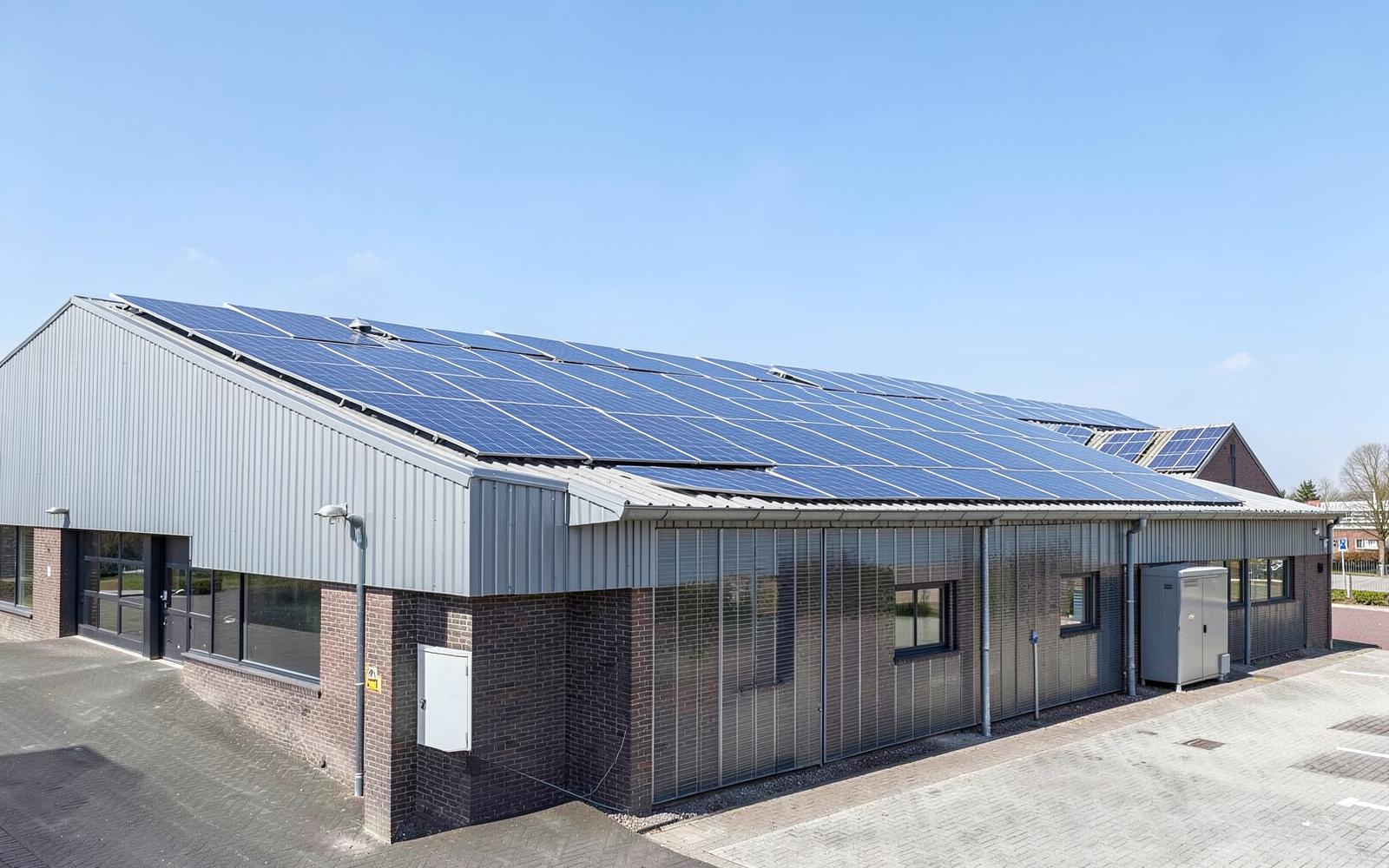
Grid congestion in Southeast Brabant is forcing companies to consider on-site generation and storage, demanding a well-thought-out financing approach.
Grid congestion is now a familiar challenge across North Brabant. Businesses wishing to expand, decarbonise, or secure a new connection are facing waiting lists because the local electricity grid has reached capacity. Regional municipalities are agreeing measures with Enexis, but that will not solve the issue overnight.
For many business owners in Brainport, this means on-site generation and storage is no longer an option to be postponed until it feels profitable, but an operational necessity to keep business running. This article examines how to finance solar panels and battery storage, and the key considerations involved.
Why grid congestion alters the financing equation
If your connection cannot expand alongside your energy demands, the business case shifts. Whereas solar panels were previously primarily about cutting energy bills, they have now also become a means of reducing grid dependency and keeping production capacity or EV charging points operational. Battery storage comes into play to shave peaks and utilise the existing connection more efficiently.
This makes the investment more strategic, but not necessarily cheaper. Battery systems represent a substantial capital outlay, and the payback period depends heavily on your specific consumption profile and the tariffs agreed with your energy supplier.
Financing options for on-site generation and storage
Solar panels and battery systems can be financed in various ways. Equipment leasing is a logical option for many companies, as the assets themselves serve as collateral, preserving your main bank borrowing limits. A loan secured against your commercial property is another route, particularly if the installation delivers lasting capital appreciation.
In addition, tax relief schemes such as the EIA lower the net capital investment. For larger installations, a combination of equity, leasing, and grants can offer the best outcome. On the equipment leasing page, you can read more about how leasing structures work for these types of installations.
- Request a clear estimate of waiting times and options for your connection from the distribution system operator
- Have an energy consultant draw up a consumption profile before sizing a system
- Compare leasing and loan quotes on total cost of ownership across the full term, not just monthly repayments
- Explore whether a shared connection or collaboration with neighbouring businesses on the industrial estate is viable
- Include maintenance and warranty terms when comparing suppliers
Decision framework: self-financing on-site generation versus leasing
If you opt to self-finance, you build equity in an asset that sits on your balance sheet and belongs entirely to you once depreciated. This suits businesses with ample liquidity and a long-term commitment to the premises. If you opt for leasing, you preserve working capital for other investments and spread the costs evenly across the term, which is particularly attractive if there is uncertainty around future relocations or expansions.
A third option is a hybrid model: partial self-financing for core assets and leasing for additions introduced later. The best choice depends on your cash position, your tax circumstances, and how certain you are about remaining at your current location.
Worked example: battery storage alongside solar panels
Suppose you already have 100 solar panels on your commercial roof and want to add a 50,000-euro battery system to reduce peak load and bypass grid congestion. Via a lease, you might pay a fixed monthly instalment over a 7-year term, which may include maintenance alongside interest depending on the contract.
Compare this to self-financing via a loan: with straight-line amortisation of 50,000 euros over 7 years, you repay approximately 595 euros per month, plus interest on the outstanding balance. Calculate both scenarios using actual quotes from your suppliers, including maintenance costs, before making a decision.
What this means for businesses in the region
Around Eindhoven, with rapid growth in manufacturing and tech companies across and surrounding the ASML campus and Brainport Industries Campus, pressure on the grid is above average. Business owners who invest in on-site generation and storage now prevent themselves from running into capacity bottlenecks in a few years' time, while proactive competitors continue to expand unhindered.
It is therefore sensible not to treat sustainability and grid congestion as an isolated issue, but as an integral part of your broader growth financing and capital expenditure planning for the coming years.
Next steps
First, check with your grid operator to assess the status of your connection and explore possibilities for expansion or flexible capacity contracts. Next, have an energy consultant evaluate your consumption profile and model an appropriate system. Then, discuss with a commercial finance adviser whether a lease, loan, or a hybrid structure works best, and use the finance calculator for an initial indication.
Frequently asked questions
- What exactly is grid congestion?
- Grid congestion means that the electricity grid in a particular location can no longer handle the supply or demand of power, resulting in delays for new or upgraded connections.
- Is battery storage always profitable?
- That depends heavily on your consumption pattern and the tariffs you agree with your energy supplier. Always have this calculated based on your own figures before investing.
- Can I combine subsidies with leasing for solar panels?
- In many cases yes, but the precise conditions differ per scheme. Check the current terms with RVO and discuss the combination with your supplier and financier.