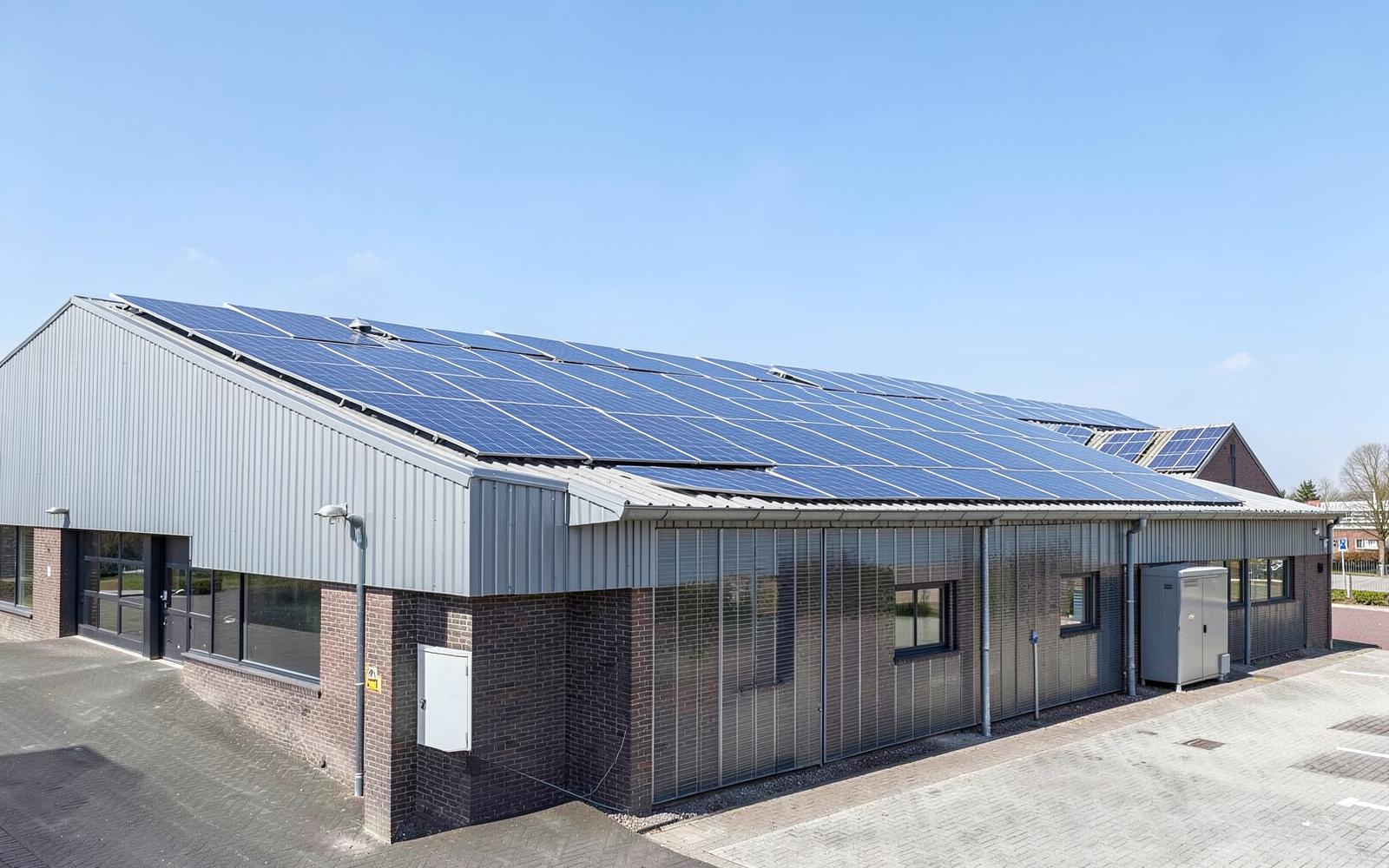
The energy label C mandate for office premises is now being enforced, hitting commercial owners who have deferred upgrades in their wallets and project schedules.
Since 1 January 2023, office buildings larger than 100 square metres must hold an energy performance certificate (EPC) rating of at least label C. While this rule has been in place for some time, active enforcement is now truly keeping owners and investors on their toes. Municipalities and regional environmental agencies (omgevingsdiensten) are stepping up inspections, meaning postponement is no longer a viable strategy.
For many business owners in and around Eindhoven, this arrives on top of an already crowded agenda: grid congestion, skilled labour shortages, and ongoing operational investments. Nevertheless, decarbonising your property is not a pure cost burden with no return. Approached correctly, you can combine legal compliance with asset value preservation and reduced utility bills. In this article, you will learn what the mandate involves, which exemptions apply, and how to handle the financing pragmatically.
What the label C mandate actually entails
The requirement applies to buildings with an office function exceeding 100 m², subject to specific exemptions such as listed heritage buildings (monumentale panden), properties earmarked for demolition or conversion within two years, and situations where office space accounts for less than half of the total floor area. Verify current conditions with your local authority or RVO, as exemption categories are rigorously defined.
Without a valid label C or higher, you run the risk that the building may no longer legally be used as office space, posing a genuine challenge when letting or selling. Furthermore, prospective buyers or tenants will insist on seeing it, and a non-compliant label inevitably depresses asset valuation during commercial negotiations.
Measures that are typically required
To move from energy label E or D to C, relatively minor measures are often sufficient: roof and facade insulation, HR++ double glazing, LED lighting, and a more efficient climate control system. For a leap to rating A or higher, you are soon looking at solar panels, heat pumps, and a thorough upgrade of the building envelope.
Importantly, you shouldn't just calculate for the label itself, but also look at the long-term business case for your property. A phased approach with a well-considered multi-year plan prevents you from having to refurbish again in five years because standards have been tightened in the meantime.
- Commission an energy assessment that clearly specifies which measures are required for label C
- Request multiple quotes from contractors with experience in commercial buildings
- Explore opportunities for combination, such as combining insulation with roof replacement
- Determine whether you plan to sell the property in the short term or hold it for the long term; this dictates your level of ambition
- Include energy management and monitoring so your results are also measurable
Financing the sustainability upgrade
Most owners finance sustainability upgrades through a combination of equity, an additional loan, and grant schemes such as the EIA for energy investments. Banks often view such applications favourably because the measures enhance the value and lettability of the collateral, and because energy savings feed directly into operating results.
For smaller owner-occupiers, extending the existing commercial mortgage is often the most logical route. Larger investors sometimes opt for a dedicated sustainability facility linked to project milestones. On the page about making your commercial property sustainable, you can read more about suitable financing options.
Worked example: factoring payback period into the application
Suppose you invest 80,000 euros in insulation, LED lighting, and solar panels for a 600 m² office building. Based on your installer's quote, you expect an annual energy saving of 8,000 euros. Without a subsidy, the gross payback period is 10 years (80,000 / 8,000).
If you receive a tax benefit via the EIA that amounts to a net saving on the investment of, say, 15,000 euros, the remaining investment drops to 65,000 euros and the payback period to just over 8 years. Always calculate these scenarios yourself using up-to-date figures for your own situation, and use them in discussions with your lender to demonstrate that the investment pays for itself.
Regional context: Brainport and grid congestion
In Southeast Brabant, grid congestion plays a significant role alongside the mandatory label C requirement. Municipalities are working with Enexis on agreements regarding available grid capacity, which affects whether you can connect new installations such as heat pumps or charging points without delay. Factor this into your planning early, as waiting times for a grid connection can delay your sustainability project by months.
Furthermore, for companies around the ASML campus and Brainport Industries Campus, demand for sustainable, future-proof commercial space is high. A property with a strong energy label is more attractive to tenants and buyers in this part of the region, making the investment compelling from a valuation perspective as well.
Next steps
Start with an energy assessment and a concrete list of measures so you know what investment is required. Next, discuss with your bank or adviser which combination of equity, loan, and subsidy best fits your situation and schedule. If you would like an initial estimate of your borrowing capacity, use the finance calculator or submit an application via the enquiry form.
Frequently asked questions
- What happens if my office does not have a C rating?
- In principle, the building may no longer be used as an office, unless an exemption applies. Check the current conditions with the municipality or RVO for your specific situation.
- Can I fully finance sustainability upgrades without putting in own equity?
- Full financing without an equity contribution is rare. Most lenders require a portion of own funds or expect subsidies such as the EIA to cover part of the investment.
- Does grid congestion affect my sustainability schedule?
- Yes, if you need a heavier grid connection for a heat pump, for example, the available grid capacity in the region can affect delivery timescales. Enquire about this with the grid operator early on.