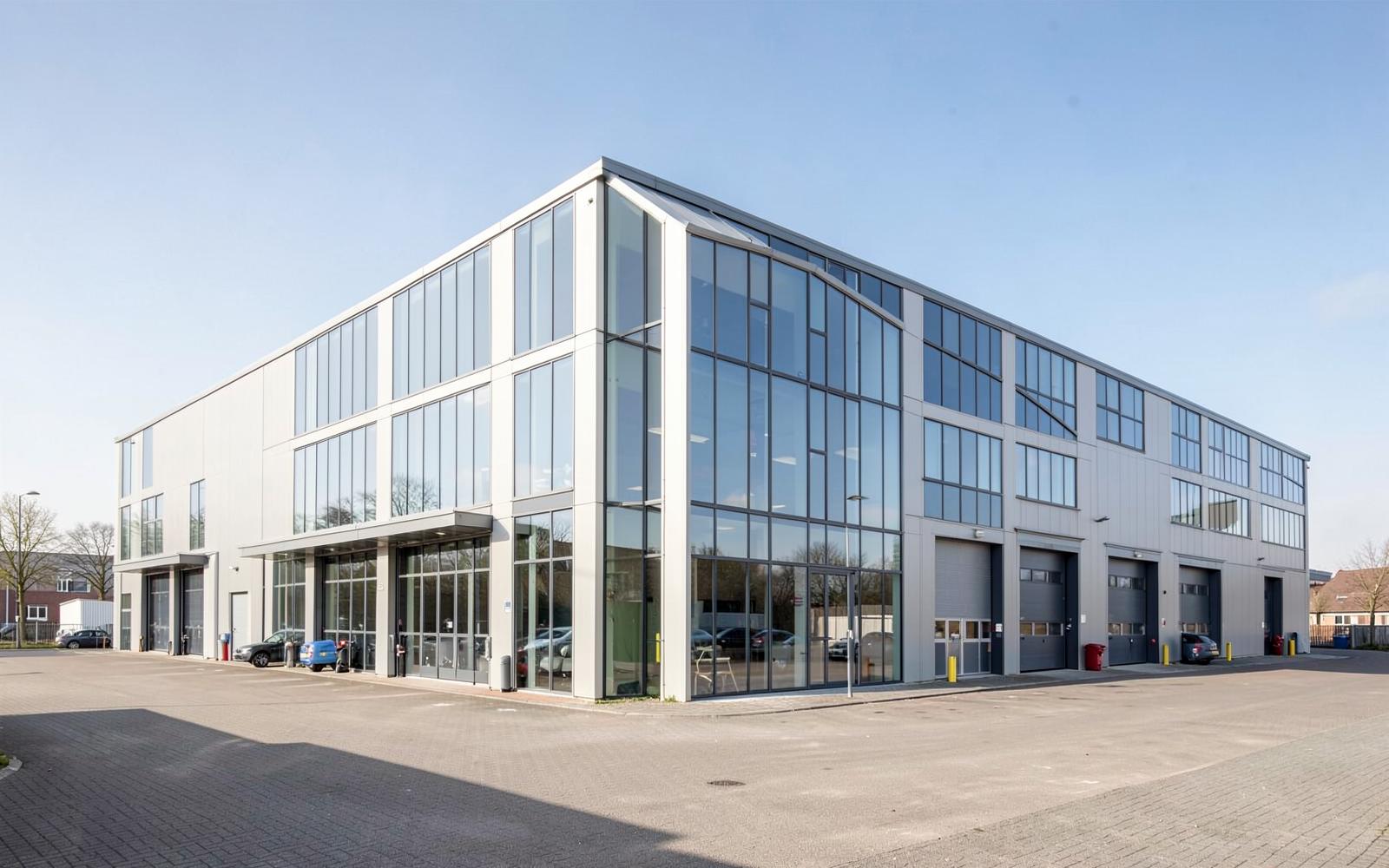
When buying commercial property in Eindhoven, your equity contribution, property valuation, and land tenure collectively determine how much finance is realistically achievable.
Buying commercial premises feels like a logical next step for many business owners after years of renting. You build up equity instead of paying rent, and you have greater control over the layout and future of your premises. At the same time, a purchase involves far more than an ordinary loan: valuation, equity contribution, and land tenure all play a role in what a bank is willing to finance.
In a region like Eindhoven, where demand for commercial space is structurally high due to growth around Brainport, thorough preparation on these fronts is all the more vital. This article explains how equity contributions and loan-to-value interact, what a valuation entails, and why land tenure is just as much a part of negotiations as the building itself.
What is loan-to-value and why does it matter
Loan-to-value, abbreviated as LTV, is the ratio between the borrowed amount and the value of the collateral. For commercial real estate, banks typically apply a lower maximum LTV than for residential property, and the exact margin depends on the property type, marketability, and the sector in which you operate. A readily marketable commercial property in a prime location generally achieves a more favourable LTV than a purpose-built building that is difficult to repurpose.
The higher the LTV, the greater the risk for the bank and the more critical the assessment of your business. A lower LTV—meaning a higher equity contribution—often results in better interest terms. Always calculate this into your own scenario before making an offer on a property.
Equity contribution: how much do you need
There is no single percentage that applies to everyone, but be aware that banks typically expect a substantial equity contribution for commercial properties, often higher than for residential mortgages. The exact amount depends on your financial results, the type of property, and your preferred loan term.
An equity contribution does not necessarily have to come from liquid funds. Some entrepreneurs leverage equity from a previous property, or combine savings with a subordinated loan from family or an angel investor, for instance. It is essential to be transparent about the origin of the capital, as banks will always verify this.
- Get your annual accounts and forecasts in order before requesting a valuation
- Determine a realistic acquisition budget in advance, including property transfer tax and notary fees
- Investigate whether grant schemes or subordinated loans can replace part of the equity contribution
- Check with your bank what LTV they apply to your type of commercial property
- Factor in a buffer for unforeseen costs post-purchase, such as deferred maintenance
The role of valuation in the process
A valuation by an independent, certified valuer is almost always mandatory for commercial real estate before a bank provides finance. The valuer examines not only the structural condition, but also the location, marketability, rental value in the event of vacancy, and the condition of the land. For commercial premises, both the market value in its current state and the vacant possession value are often assessed, as the bank wants to know what the collateral is worth if things go wrong.
Don't be caught out: the appraised valuation can differ from the asking price, especially in a tight market like Eindhoven where asking prices are sometimes driven up by scarcity. Allow room for this in your negotiations and financing plan.
Land tenure: often underestimated
For commercial properties on industrial estates, the land is sometimes held on a ground lease (erfpacht) from the municipality rather than freehold. This alters fundability: banks generally find it easier to accept freehold property as collateral than leasehold land, because ground lease terms affect value and transferability.
Therefore, always clarify whether the land is freehold, what the remaining term of any ground lease is, and whether ground rent reviews are scheduled. This is precisely the kind of detail that only surfaces in the small print of the purchase contract, yet directly affects financing.
Worked example: purchase with equity contribution and loan
Suppose you purchase a commercial property for 500,000 euros. The bank applies an LTV of 70 per cent on the appraised value, which equals the purchase price. That means a loan of 350,000 euros and an equity contribution of 150,000 euros, excluding purchaser's costs such as property transfer tax and notary fees, which you often have to finance separately or fund from equity.
For property transfer tax, factor in the applicable rate for non-residential real estate and add notary and advisory fees to your total cost calculation. This prevents having to scramble for additional financing midway through the process because ancillary costs were underestimated.
Next steps
Start by getting your annual accounts in order and making a realistic assessment of your equity contribution. Next, request an indicative valuation or at least a market analysis of comparable properties in the region, and discuss with your lender which LTV and terms suit your situation. On the page about financing commercial property, you will find more details on the various financing options, and the finance calculator provides an initial indication of your possibilities.
Frequently asked questions
- How much equity do I need for a commercial property?
- There is no fixed percentage, but anticipate a substantial equity contribution, often higher than for a residential mortgage. This depends on your business performance and the type of property.
- What if the valuation is lower than the purchase price?
- In that case, the bank finances based on the lower of the two values, meaning you will often have to contribute additional equity to bridge the gap.
- Does a ground lease make an acquisition harder to finance?
- Yes, banks generally assess leasehold land more critically than freehold ownership, due to the impact of ground lease terms on value and marketability.