Many businesses in Southeast Brabant are held back not by capital but by capacity: their grid connection simply cannot accommodate the next machine, heat pump, or EV charging hub. This article explains how contracted capacity works and which solutions can be financed.
Anyone looking to expand in Eindhoven, Helmond, or on a business park such as Ekkersrijt or De Run quickly discovers that the question is no longer just whether the investment delivers a return, but whether the electricity grid can support that expansion. Grid operators operate waiting lists for additional transmission capacity across large parts of Brabant. This alters the sequencing of your plans: first establish what your connection permits, and only then structure the investment and financing.
This article explains what contracted capacity actually means, how to recognise when you are hitting the limit, what technical routes exist when expansion is unavailable, and how to make those solutions fundable.
What contracted capacity actually means
Your grid connection involves two metrics that are often conflated. The physical connection capacity is what the cable and connection can technically handle. The contracted transmission capacity is what you have agreed with the grid operator you may draw or feed back, expressed in kW or kVA. You pay fixed charges for that agreed capacity, regardless of whether you use it.
In practical terms: you might have a machine that fits your premises, your budget, and your schedule, yet you are not permitted to switch it on because your peak load exceeds your contracted capacity. Exceeding it incurs surcharges and, if persistent, an adjustment to your contract that is by no means guaranteed to be granted while there is congestion on your section of the grid.
How to spot that you are hitting the limit
That final point in particular is crucial. Many companies do not have a structural capacity issue, but rather a peak demand problem lasting just a few hours. That distinction determines which solution is viable and which investment you need to finance.
- Your energy supplier or grid operator invoices you for exceeding your contracted capacity
- Your installer reports that a new machine, heat pump, or charging point cannot be connected without upgrading the connection
- The quotation to upgrade your connection has a lead time of several years or ends up on a waiting list
- Your solar panels are regularly curtailed because feeding power back into the grid exceeds your connection capacity
- Peak load is concentrated into a few hours a day, whereas your connection is more than sufficient for most of the day
Routes when a grid connection upgrade is not possible in the short term
If expanding your connection is not an option, four main routes remain. They are not mutually exclusive; in practice, a combination works best.
- Peak shaving through process control: shifting production or charging to off-peak hours, often the most cost-effective first step
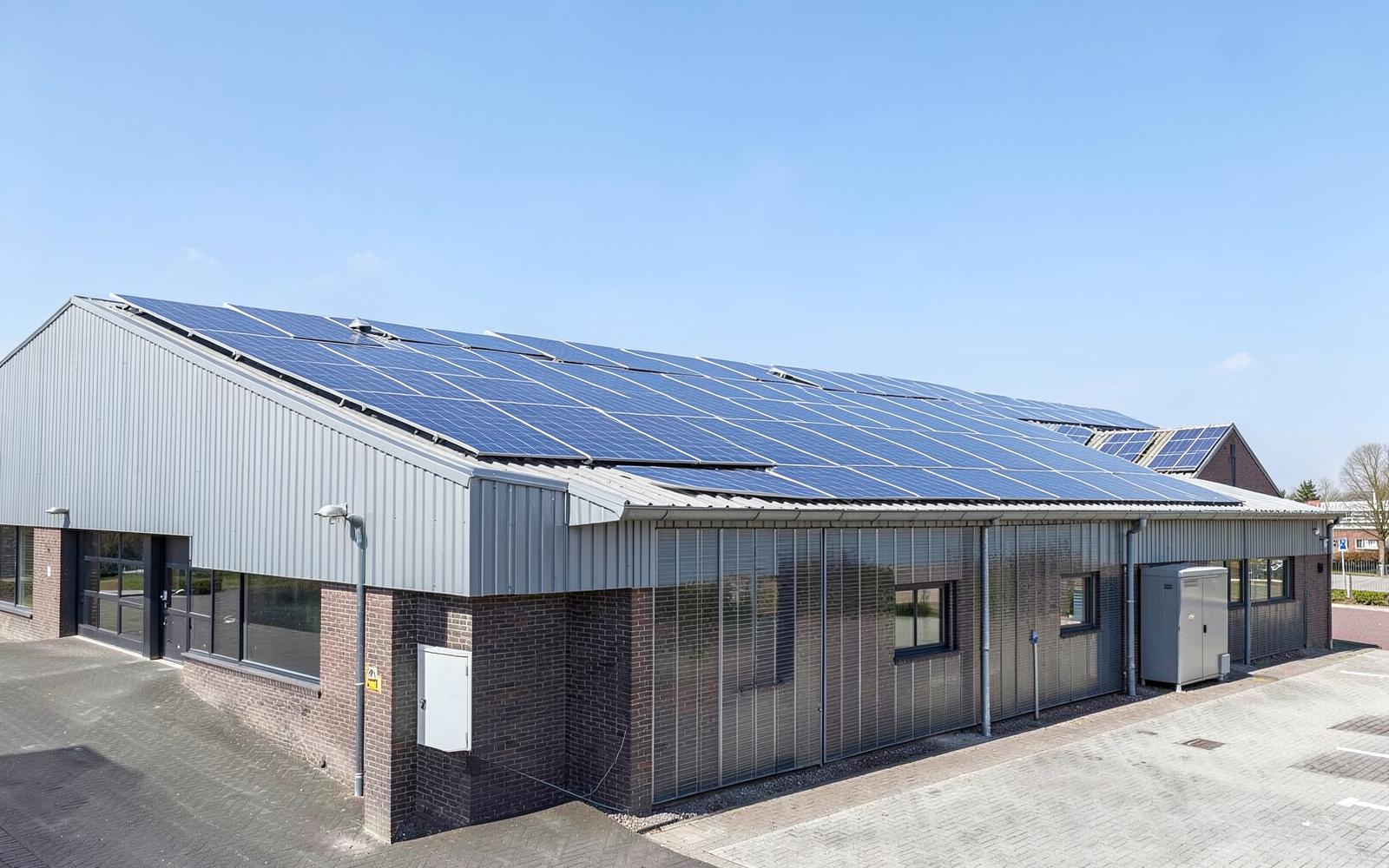
- On-site generation: solar panels on the roof or façade reduce grid consumption during the day, but do not solve an evening peak
- Battery storage: shaving peaks and shifting surpluses across the day, allowing the same connection to handle more demand
- An energy hub or shared connection: sharing capacity with neighbouring businesses, so that peak demands from different companies balance each other out
What this means for your finance application
Lenders assess an energy investment differently from machinery. With machinery, the question is what turnover that machine will generate. With a grid-related investment, the question is which costs you avoid and what production you enable that would otherwise stall. This requires different supporting evidence: a time series of your consumption data, a calculation of avoided costs and, where applicable, the turnover that could not be realised without the investment.
In practical terms, it helps if your application includes 15-minute interval data of your consumption covering at least twelve months, your current contracted capacity, an installer quote, and a payback calculation based on your own tariffs rather than brochure averages. See also our page on financing sustainability for suitable financing structures.
A sequence that works in practice
- Request your 15-minute interval data from your supplier and determine your actual peak profile
- Check with the grid operator what your contracted capacity is and whether there is congestion in your grid area
- Calculate what process control alone delivers; this often costs very little and lowers the required investment amount
- Only then commission a technical design for generation, storage or charging infrastructure, tailored to the remaining bottleneck
- Apply for finance on the basis of the final design, including a subsidy check and metering data
Common mistakes
- Investing in additional solar panels when your peak demand occurs in the evening
- Sizing a battery based on a rule of thumb rather than your own 15-minute interval data
- Submitting a finance application before the grid operator has confirmed what is technically permissible
- Submitting subsidy applications too late, leaving you with contractual commitments that are no longer eligible for funding
- Forgetting that a lower contracted capacity also saves money if your peak demand drops permanently
Frequently asked questions
- What is the difference between connection capacity and contracted capacity?
- Connection capacity is what your grid connection can technically handle; contracted capacity is what you have agreed with the grid operator you may draw or feed back into the grid. You pay for that agreed capacity, even if you do not fully utilise it.
- Can I secure finance for a solution to grid congestion?
- Yes. Investments in on-site generation, battery storage or automated control are financeable, provided you can substantiate with metering data which costs you avoid and which production or growth you unlock.
- Should I approach the grid operator first or a lender?
- The grid operator first. What is technically permissible dictates the design, and the design dictates the investment amount for which you apply for finance.