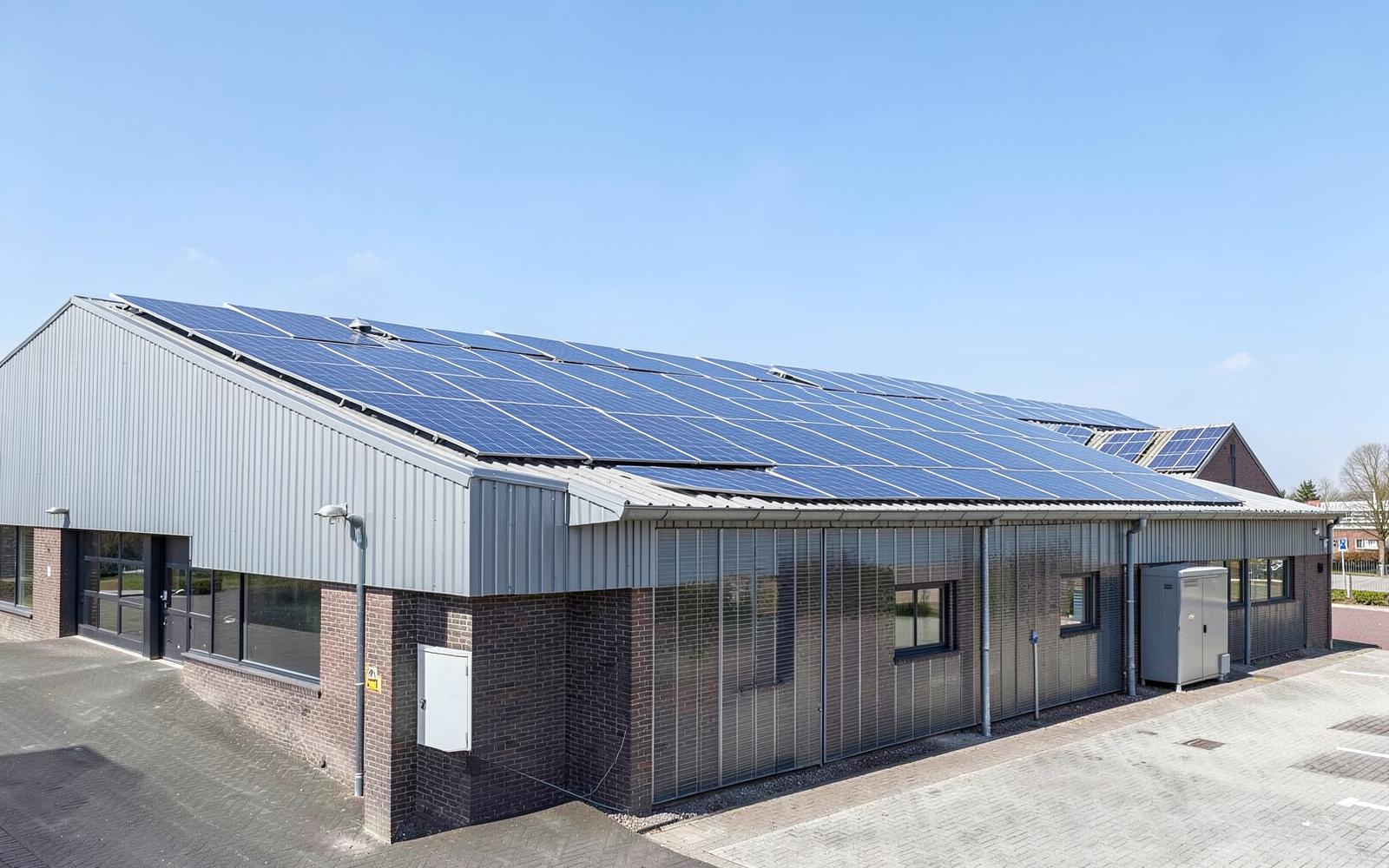
A battery is not an end in itself, but a tool to shave peaks and make better use of on-site generation. This article explains when the numbers work and which financing structures are suitable.
Battery storage is high on the agenda for businesses coming up against their grid capacity limits. The promise is enticing: shaving peaks, using solar power generated on-site in the evening, and sometimes even profiting from price arbitrage. The reality is more pragmatic. Whether a battery delivers a return depends on your load profile, your energy tariffs, and whether it resolves an operational bottleneck that is otherwise costing you money.
This article covers the four commercial revenue streams of a business battery, how to determine capacity, the risks lenders assess, and the financing structures used in practice.
The four ways a battery delivers value
The first three routes offer the highest predictability and are therefore the most readily bankable. A business case relying entirely on trading revenues will face rigorous lender scrutiny, as cash flows then hinge on market volatility beyond your control.
- Peak shaving: lowering your maximum peak demand, allowing you to operate with a lower contracted capacity and reducing standing charges
- Increasing self-consumption: storing solar power generated during the day for use later on, rather than exporting it to the grid
- Bypassing grid congestion: getting more performance out of the existing connection, allowing an expansion or EV charging plaza to go ahead
- Arbitrage trading on price fluctuations: charging at low prices, discharging at peak prices — full of potential, but revenue is variable and subject to market volatility
Sizing based on your own data
A battery is defined by two key metrics: power output in kW, which determines the peak load you can shave, and capacity in kWh, which determines how long you can sustain it. Looking only at kWh often results in purchasing too much capacity for too little operational benefit.
Analyse your 15-minute interval data over a full year to determine how often, how high, and how long your demand peaks occur. A business with a single daily two-hour peak requires a completely different battery system compared to a business with short, sharp peaks throughout the day. Have a supplier run the simulation on your actual metering data, and insist on seeing the assumptions, not just the bottom-line figures.
What lenders evaluate
- The reliability of the savings: avoided grid fees and contracted capacity reductions are far more concrete than projected trading margins
- Technical lifespan and warranty terms, particularly cycle life and guaranteed degradation / residual capacity
- Maintenance obligations and who carries operational responsibility throughout the term
- Residual value and secondary market liquidity of the asset as collateral
- Insurability and the fire safety requirements imposed by insurers and the local authority regarding installation and siting
Financing structures that fit
A battery is an asset with distinct physical value, making asset finance and leasing natural options. Under finance lease or an equipment loan secured against the asset, the facility term typically aligns with technical useful life. Where the battery forms part of a wider sustainability overhaul for commercial premises you own, incorporating it into commercial property finance can be more attractive due to longer amortisation periods.
In addition, tax relief schemes exist for investments in energy-saving business assets. Check in advance whether the selected system features on the relevant qualifying list and submit the claim within the statutory deadline after committing to the investment; missing the deadline results in total forfeiture of the benefit.
Risks to mitigate beforehand
- Oversizing by relying on rules of thumb rather than your own 15-minute interval data
- A business model heavily reliant on price spreads without downside modelling for shrinking margins
- Ambiguity over who manages automated system dispatch and ongoing maintenance over the lifecycle
- Planning, permitting, and fire safety requirements discovered only after placing the order, triggering delays and cost overruns
- Submitting a grant application only after contracts have already been signed
Next steps
- Collect 15-minute interval data covering at least twelve months and map your peak profile
- Have two suppliers run simulations using that same dataset and compare their underlying assumptions
- Determine by how much your contracted capacity can be lowered and model those savings rigorously
- Assess grant schemes and tax incentives before signing contracts
- Apply for finance with the simulation, supplier quote, and historical metering data attached
Frequently asked questions
- When does a commercial battery make financial sense?
- Chiefly when you have demonstrably high, recurring peak loads, or when the battery unlocks an expansion that would otherwise stall. Returns relying entirely on price arbitrage trading are far less predictable.
- Can I lease a battery instead of buying it outright?
- Yes. Because it is a tangible asset with residual value, finance lease and asset finance are common routes, with terms tailored to technical lifespan.
- How large should my battery be?
- That depends on your 15-minute interval data: power output (kW) dictates how much peak load you shave, while storage capacity (kWh) determines how long you can sustain it. Insist on sizing simulated against your own consumption rather than generic rules of thumb.